

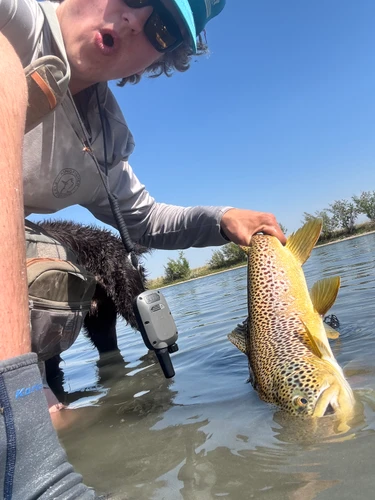
Clark Fork River Fishing Report 11/16/26
The Clark Fork continues to offer some of the better big-water fishing opportunities around Missoula, although conditions are becoming increasingly winter-like. The river above town is running approximately 1,510 cfs, essentially unchanged from Friday's 1,511 cfs. Below Missoula, recent measurements have been around 2,380–2,400 cfs. These stable flows provide good depth along banks, deeper riffles, and slower current seams, giving trout plenty of comfortable holding water.
The weekend brought scattered showers and relatively mild temperatures across western Montana. However, another storm system is arriving Monday, bringing valley rain, periods of snow, and considerably colder temperatures. Tuesday should be especially chilly, with afternoon highs struggling to reach 40 degrees.
The cooler water is pushing trout toward deeper, slower holding areas. Focus on inside bends, soft banks, foam lines, riffle transitions, and deeper green runs adjacent to stronger current. Fish are becoming less willing to chase food across fast water, so presentation and location are especially important.
The Clark Fork can still offer excellent late-season dry-fly fishing, particularly when cloudy conditions encourage mayfly activity. However, anglers should be prepared to switch techniques quickly if surface feeding is limited.
Fall Hatches
BWOs remain the primary dry-fly attraction on the Clark Fork. Cloudy, damp afternoons can encourage these small mayflies to emerge, particularly in slower foam lines and tailouts. Watch carefully for consistent rising fish before switching to small Comparaduns, parachutes, or emergers.
Midges are becoming increasingly important as temperatures fall. Small Griffith's Gnats, CDC midge emergers, and midge clusters can be particularly effective when trout are feeding selectively in slow-moving water.
October Caddis activity has largely ended, and Mahogany Duns and Hecubas are no longer reliable. Terrestrials have also disappeared from the regular program.
Nymphing should remain the most consistent approach throughout the week. Fish Frenchies, Pheasant Tails, Perdigons, Zebra Midges, and smaller BWO nymphs through deeper seams and slower buckets. In clear water, lighter tippet and careful presentations may improve success.
Streamer fishing remains a worthwhile approach for anglers hoping to move larger fish. The Clark Fork offers excellent structure for working Sparkle Minnows, Kreelexes, Peanut Envies, and small articulated streamers. Concentrate on deeper banks, shelves, and drop-offs, using slower retrieves as water temperatures continue dropping.
Outlook for the Week
Monday and Tuesday's unsettled weather could provide some of the better BWO and streamer opportunities of the week. The colder conditions expected Wednesday through Friday will likely shorten the feeding window, making late morning through mid-afternoon the best time to fish.
What's Working
Dry Flies
-
BWO Comparaduns #18–22
-
BWO Emergers #18–22
-
BWO Parachutes #18–22
-
Film Critics #18–22
-
Griffith's Gnats #18–24
-
CDC Midge Emergers #18–24
-
Parachute Adams #18–22
Nymphs
-
Pheasant Tails #16–20
-
Frenchies #14–18
-
Perdigons #16–20
-
BWO Nymphs #18–22
-
Zebra Midges #18–22
-
Caddis Pupa #14–18
-
Prince Nymphs #12–16
-
San Juan Worms
Streamers
-
Sparkle Minnows
-
Peanut Envy
-
Kreelex
-
Mini Dungeons
-
Thin Mints
-
Sculpzilla
-
Woolly Buggers
-
Small Sculpin Patterns